Friday, January 27th


Welcome To CODEP

In the mountains near Léogâne Haiti, Haiti Fund, Inc. supports a project referred to as CODEP which stands for COmprehensive DEvelopment Project.

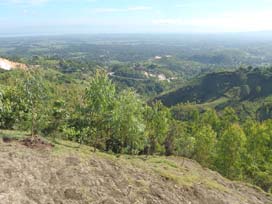
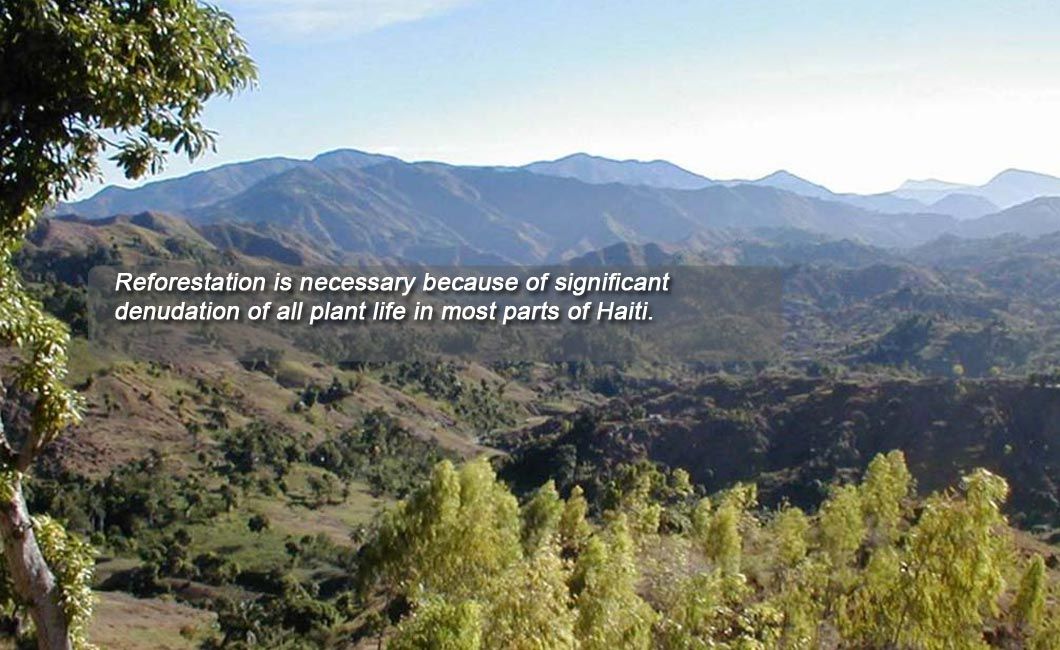
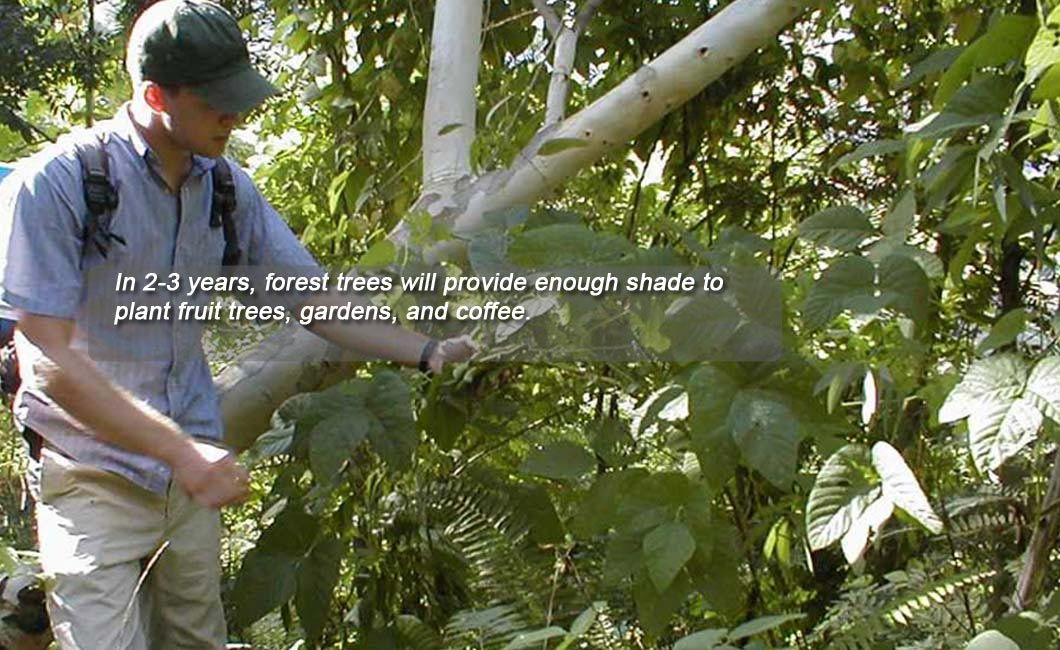
For nearly twenty years now, Haitian farmers have worked to cut shallow erosion control ditches on the steep mountainsides.  At the front edge of these ditches, they plant deep-rooted holding grass and behind, every ten feet or so, a seedling shade tree, which is fast-growing and hardy, will regenerate from the root several times if cut down.  In a year or two, when the shade trees are 15 feet or more tall, enough leaves collect in the ditches to make a natural compost where gardens, coffee, and fruit trees can be raised.  Over the course of the project, it has expanded to the point where approximately 46 square miles or 30,000 acres (12,000 hectares) are covered in a patchwork quilt of reclaimed land.  We also encourage education and nutrition improvements so that the health and hygiene of the people are improved along with the environment.  Effecting reforestation is only the first step.  People who have been involved for a long time now proudly talk of how their succeeding generations will be able to live and support themselves on the land of their heritage.  It is this proud hope for the future that sustains those who have been involved in creating a project that one day will become completely sustainable – environmentally, culturally, and economically.

Our Mission and Vision

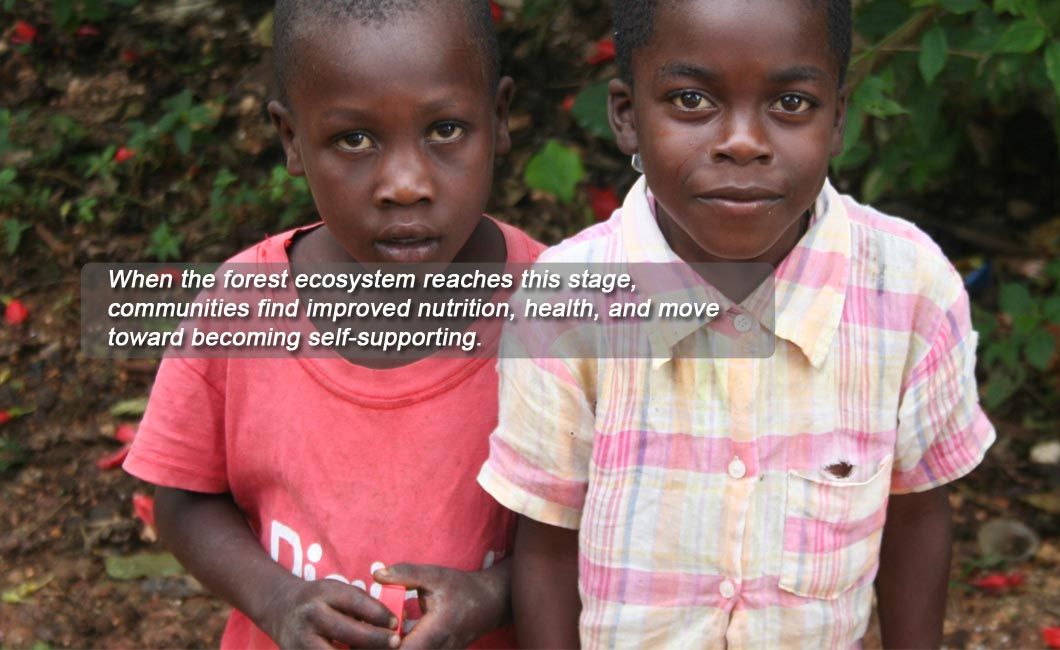
Our Vision is of a land of plenty in the mountains of Haiti where the people live in peace and have embraced a plan to restore God’s creation. In this place the residents enjoy good health, quality education and economic stability so that they can live together as a thriving community of God’s children.

Our Mission is to cooperate with and assist the people of rural Haiti by initiating, funding, administering, and sustaining development programs aimed at increasing self-sufficiency.

CODEP Still Strong As Ever

In the summer, in Haiti, it is astoundingly hot and humid. When rainy nights cool the air 5 or 10 de-grees to a more-comfortable 85°, the morning starts out cool. Light comes by 5:00 AM and it isn’t long before the oppressive morning humidity is upon you. We usually start the work day before 6:00 AM, to deliver boxes of food graciously provided by Stop Hunger Now, or deliver tools and seeds, make visits to CODEP work groups, or just to head up the mountain for a meeting. It stays cooler longer on the mountain, but by 10:00AM, all bets are off. Just walking down or up a hill in the muddy trail soaks one’s clothes with sweat completely in only a few minutes.

But, lest you think all the heat and humidity are flagging the souls of CODEP people, you are very wrong. They have an amazing capacity to do prodigious amounts of work, and trip lightly up and down the trails that require waking sticks and careful measuring with every step for most Americans. The season is high for planting fruit and shade-tree seeds in ‘pepinyès’ which are tree seedling nurseries. Of the roughly 950,000 trees CODEP plants each year, approximately 20 % of these are fruit trees – avocados, cherries, mangos, breadfruit, papaya, oranges, lemons, limes, and a variety of other fruit plants that aren’t known well outside of Haiti. In addition, the groups have begun planting and growing coffee, because in three years they will have a cash crop to sell.

There are 33 work groups in CODEP, from small ones in developed areas of four or five people, all the way to twenty-five or more. They dig contour canals (ramps to the Haitians), plant vetiver holding grasses, and than plant shade tree-seedlings strategically above the canal. The trees’ leaves, which fall all year around, collect in the ditches and begin to decay and form a natural compost from which verdant soils come for planting gardens and varieties of fruit trees, coffee and other crops.

Vetiver grass is common in many places in the world, used often in shady areas where other grasses won’t grow, and kept cut short all season long. In Haiti, its deep roots help hold the leading edge of the canals from eroding in rainstorms. The grass is plentiful and is simply cut off on the way to the job site, then planted merely by sticking it in the ground. By the end of the day it looks withered and worn, looking dead, but in a week or so, new shoots of green have appeared and in only a few months it stands taller than most people, and can have a root system even deeper.

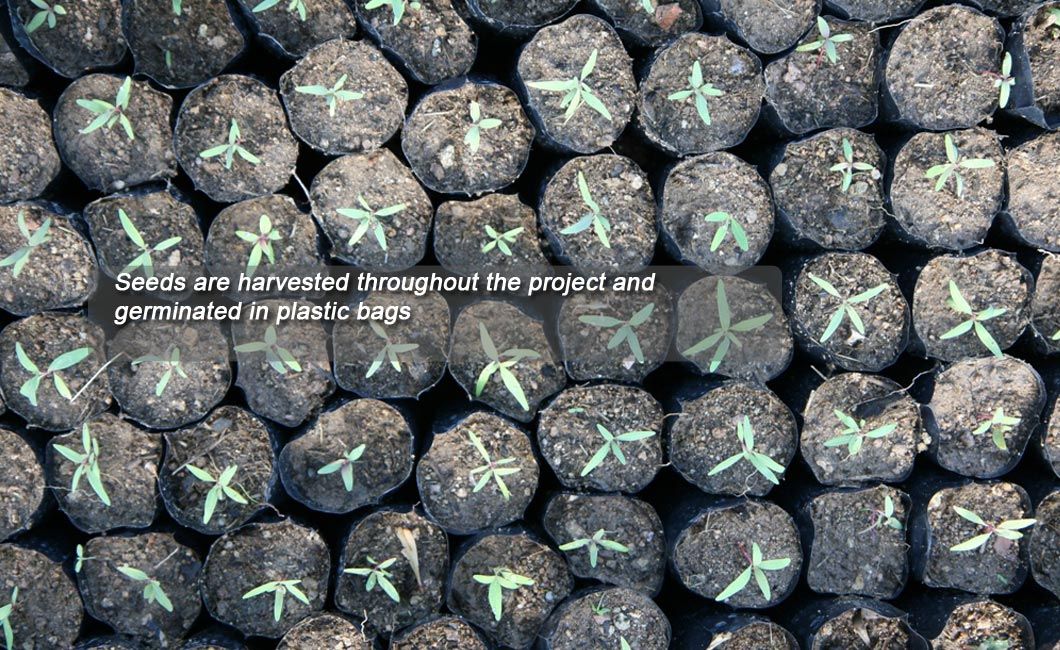
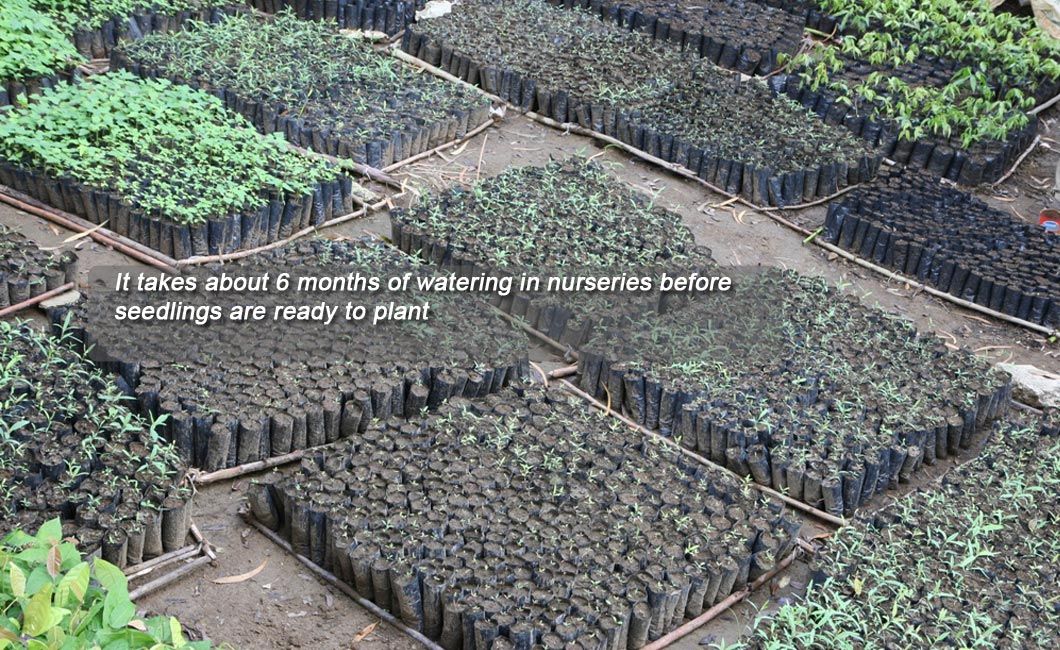
All of the trees grown in the pepinyès are started from seeds carefully collected by CODEP workers and planted in little plastic sacks where they are stacked close together and wa-tered daily for six months. They will grow to 6 – 15 inches tall and then are planted along the hillsides. Sometimes visiting mission groups help a crew in a pepinyè ‘break dirt.’ This is the process whereby dried animal dung is mixed 50-50 with topsoil to make a rich nutrient for the seedlings to germinate and grow. The pepinyès have poles put in the ground around them and they are covered with palm fronds to keep out the harsh summer sun so the tender seedlings can get a good start on the way to becoming a “CODEP Tree.”

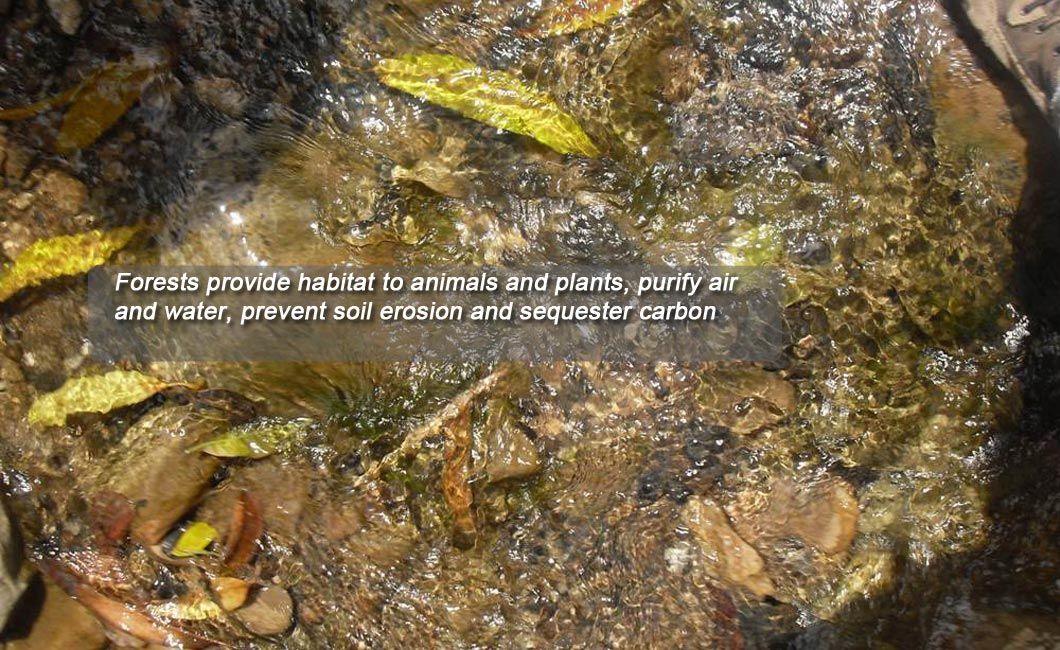
And, there is ample evidence of the value of this work – in terms of holding the water in the mountains to serve to nourish the trees. At the left is the river Larione as it flows under a bridge near Léogâne, which drains a nearby watershed not served by CODEP. And, on the right is the Kormye River, draining CODEP forests – note the significant difference in water flow. This means that much of the summer rain runoff is held in the mountains to nourish the trees, and consequently does not erode the topsoil and valuable nutrients.

So, in spite of the heat and humidity, the summer in Haiti is a time of rejuvenation and growth and you can bet that everything grows incredibly fast.

Click to review the
earthquake update notes


Click to view
the full size map

Newsletters
June 2011
November 2010
June 2010
February 2010
November 2009

10 Minute Slide Show of our Project:
 

For a number of months, we have had an article posted here which describes with wonderful clarity what the “Haiti Experience” is really like, especially from the perspective of one who is making a visit for the first time.  Now, we replace that article for one which is an essay on the thoughts, actions, feelings, and discernment from God which come from the experience.  This article, by Rev. Michelle Wahila, provides yet another humbling and moving way to describe what CODEP’s development project is all about.  Enjoy. (You will be interested to know that both authors, Amy Lewis and Michelle, have recently been elected to the board of directors of Haiti Fund, Inc., where their perspective and energy can be captured to further the work in mission and love directed toward the people of Haiti).


Building Goodness Foundation has been very active within CODEP, as well throughout the world by building many houses within our project area. Here is a link to their web site.